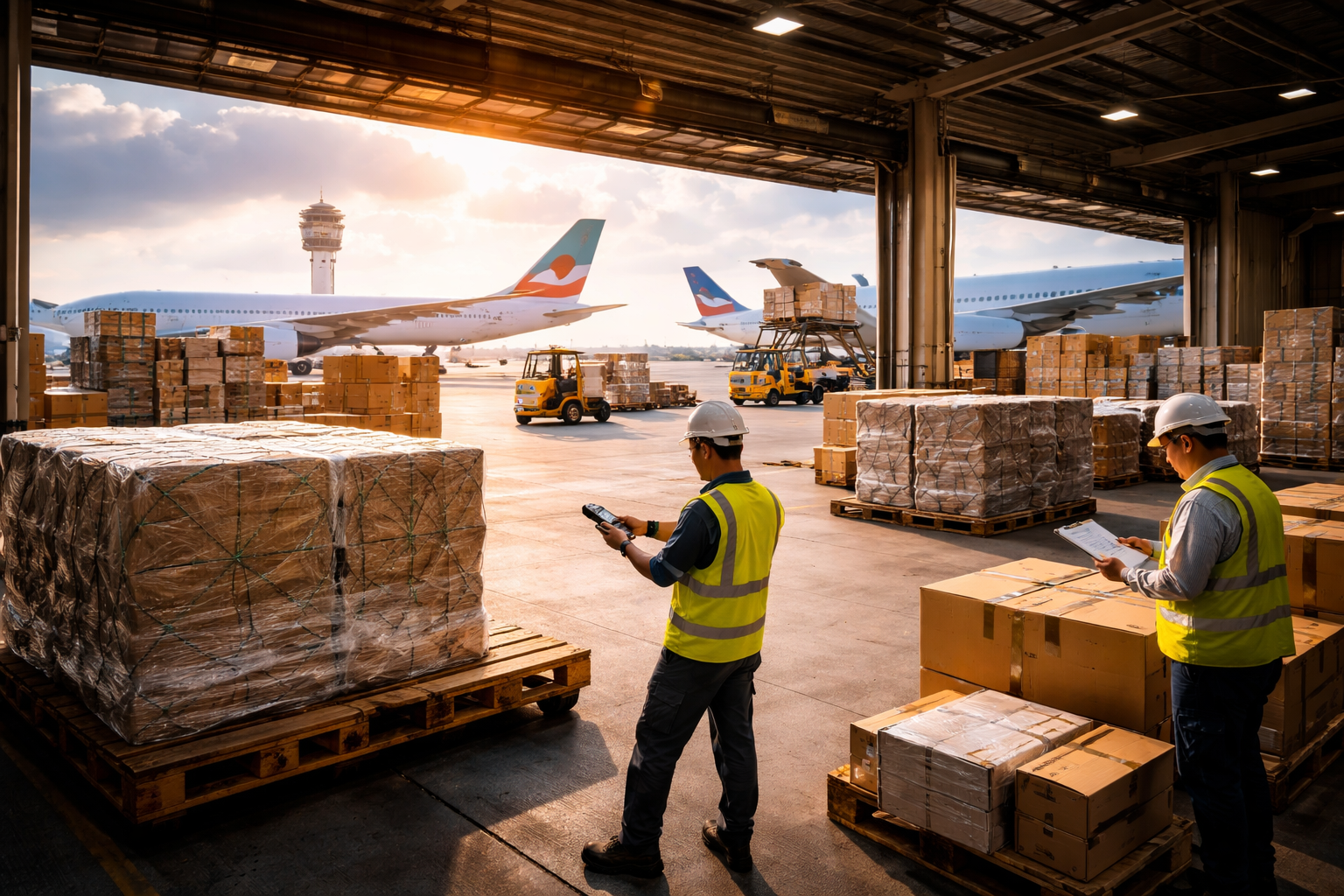
Not every cargo route becomes strategically important. Some corridors are busy but replaceable. Others shape how goods move across regions and how quickly businesses can respond to demand. The Hong Kong–UAE air cargo route belongs to the second group. Its importance is not just about geography. It is also about function. Hong Kong is closely linked with dense trade flows, fast cargo handling, and the movement of high-value goods. The UAE, especially Dubai, has become a major redistribution hub where shipments are sorted, redirected, and sent onward to other markets. Together, they form a corridor that supports trade far beyond a single origin and destination.
Why This Route Does More Than Connect Two Markets
At first glance, Hong Kong to the UAE may seem like a standard Asia–Middle East air freight lane. In practice, it serves a broader role. A significant share of cargo on this route is not meant to remain in one place. It moves through the UAE as part of a larger chain that may continue to Europe, Africa, or other parts of the Gulf.
That is one reason air freight matters here. Companies often move goods that lose value when they lose time. Electronics, components, fashion items, and urgent commercial shipments all depend not only on speed but also on predictability. More route-specific information is available here https://air-cargo-global.com/route/hong-kong-uae/.
A route becomes strategically important when it reduces uncertainty, supports fast transfers, and helps businesses maintain stable supply flows.
What Kind of Trade Depends on This Corridor
The Hong Kong–UAE route is especially relevant for goods that are valuable relative to their weight or sensitive to delivery windows.
Electronics and components
Hong Kong remains an important gateway for electronics and related cargo. These shipments often move on tight timelines because product cycles are short and delays can affect sales, assembly, or distribution.
Commercial cargo for re-export
The UAE is not only a destination market. It also works as a hub. Goods arrive there, are processed, and then continue to nearby or long-haul markets. This makes the route useful for companies that want regional reach without building separate logistics chains for every destination.
Urgent business shipments
Some cargo cannot wait for slower transport. Replacement parts, limited-stock goods, and time-sensitive orders are common examples. In such cases, air freight supports business continuity rather than convenience.
Why Businesses Choose Air Freight on This Lane
The main advantage of air cargo on this route is not speed alone. It is the ability to keep business decisions flexible.
A company can respond to unexpected demand, move inventory faster, or avoid the cost of waiting for slower transport. That matters in sectors where timing affects cash flow, stock availability, and customer commitments. Sea freight is more economical for many cargo types, but on this corridor the value of air freight often lies in what it helps prevent: missed deadlines, stock gaps, and disrupted distribution plans.
Another reason is network structure. Hong Kong and the UAE are both deeply connected to international cargo systems. That gives businesses more routing options and more flexibility when market conditions change.
Why This Route Matters in a Changing Trade Environment
Global trade is under constant pressure from delays, shifting demand, and operational disruption. In that environment, businesses value routes that allow fast adjustment, not just fast movement. The Hong Kong–UAE air cargo corridor supports that kind of flexibility.
It helps companies serve multiple markets from a strong transit point. It shortens response time when orders change. It also supports supply chains built around smaller, faster, and more frequent shipments rather than large, slow replenishment cycles.
That is why this route matters beyond the cargo itself. It reflects a broader shift in trade: businesses increasingly value speed, control, and access to multiple markets.
Conclusion
The Hong Kong–UAE air cargo route matters not simply because it is active, but because it performs several functions at once. It links production with redistribution, supports high-value trade, and gives companies a faster way to respond to changing conditions.
In modern logistics, the strongest routes are not always the cheapest. They are the ones that help businesses remain flexible and resilient. This corridor is a clear example of that.